Dear ,
Today, Ultimate Pet Nutrition has an important warning about your cat's food and its possible link to serious health problems (plus natural ways to improve your feline's health)...
=======
Is your cat trying to tell you something?
According to Dr. Gary Richter, one of the top veterinarians in the world, many cats are at risk of serious health issues, but their owners may be missing the warning signs.
"It's an epidemic. 1 out of 3 cats over ten years old will get cancer," says Dr. Richter. "Even young kittens are at risk. And it's pretty much all due to one thing: Food."
According to Dr. Richter who was recently voted "America's Favorite Veterinarian" and has over 20 years of experience with cats of every shape and size, certain cat foods contain a dangerous chemical that wreaks havoc on our cats' bodies. This, in turn, leads to digestive discomfort, weight gain, joint problems, bladder issues, vomiting, smelly breath and poop, itching, allergies, and even early
death.
Fortunately, by simply doing one thing to your cat's food, Dr. Richter has seen thousands of cats reverse these troubling conditions. Dr. Richter actually discovered this trick which anybody can do, right in their kitchen while trying to improve his own cat Frieda's health.
"It's easy, and you don't need to change your cat's food. It only takes about two minutes a day," Richter said on a call with reporters and industry experts.
Dr. Richter, a world-famous expert in both Western and Holistic pet care, says he's found a simple way to improve cat health that anybody can do.
Now, for the first time ever, Dr. Richter has created a short video where he explains everything about the true cause of feline health issues, including how people can naturally fix then, on their own, right from home.
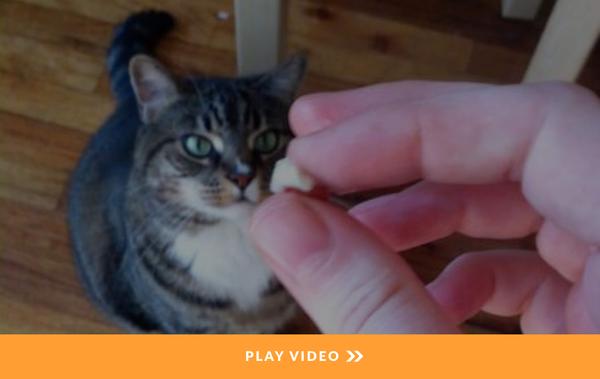
The video is presented below by Dr. Richter, free and uninterrupted.
So far, the reviews have been stunning, with viewers saying their cats' health improved in a matter of weeks or even days.
One viewer commented: "This is amazing! If you want your cat to live a long time and be happy, these tips are a godsend. So easy and so important."
Of course, Dr. Richter's announcement was met with some hesitation. We spoke to some veterinary health experts who attended the call, who advised that people keep their expectations realistic.
"This idea is great, and he's a really well respected veterinarian and researcher," said one pet expert in attendance. "But try it first. This is helping a lot of cats, but it's rare that you find one thing that works for everyone."
You are receiving this message because you either purchased one of our top-selling health products or joined us from our website. Please know we are happy to have you as a devoted reader, but if you decide to, you can change your email preferences at any time. Remember, we have plenty more recipes, cooking tips, and articles on our website.
In case you missed the chance to read our article the first time around... here it is again:
8 Foods to Fight the Blues
A recent headline on the cover of Parade magazine caught my eye. It said, "Top Doctors Solve Your Medical Problems".
One of the problems they claimed to have a "solution" for was depression. So I turned the page to find out what it was.
I was hoping to read about the vital links between food and mood. But there wasn't a single word about the nutrients that influence our brain chemistry.
Nor was there any mention of the miraculous, mood-boosting benefits of sunlight. And not even a passing word about the benefits of vigorous exercise - proven in many studies to alleviate depression completely.
Instead, the article read like a series of ads for psychiatric drugs. "Dozens of medications are available," said the author, Dr. Ranit Mishori. Worse yet, she didn't mention a single risk (including suicide) associated with taking anti-depressants.
In fact, the article glorified anti-depressants and only cited counseling as an adjunct therapy, instead of a first course of treatment.
In other words, why go to the trouble of actually talking to someone about your problem... or trying to figure out and address the underlying cause... when you can just take a pill?
Of course, I wasn't surprised by this at all. In fact, it was exactly what I expected. Big Pharma spends BILLIONS on advertising in the mainstream media. And they certainly get their money's worth.
Pushing these (not-so) "happy" pills has become the norm in our society. More than 27 million Americans take some form of antidepressant. And while there is no long-term clinical evidence backing the efficacy of these medicines, it doesn't stop Big Pharma from reaping billions every year.
As with so many other areas of "modern medicine", antidepressants don't actually address the cause. They may target certain factors, but in the human body - and especially in the brain - no single element works in a vacuum. Everything is connected.
But here's the good news. Mother Nature's pantry provides all of the essential ingredients your brain needs to function optimally.
Here are the top natural mood-boosters and how they work:
- Omega-3 Fats: These fatty acids are absolutely essential to your brain, yet up to 80% of us don't get enough. Omega-3's help build the neuronal connections in the brain as well as create the receptor sites for neurotransmitters. Also, the more omega-3s in your blood, the more serotonin you make and the more responsive you become to its effects. Serotonin influences a variety of psychological
functions and it is vital for helping to relay messages from one part of the brain to another. Optimize your omega-3s by enjoying wild, sustainable seafood (like salmon and sardines) and by taking a high quality fish oil (like Carlson's).
- Vitamin D: The sunshine vitamin can help brighten your mood. But up to 90% of us are deficient, at least part of the year. As many as 50% are critically deficient. Optimize your vitamin D levels by exposing your body to the sun for 20-30 minutes daily, if possible. If you are unable to spend time in the sun or if you live in an area where sunbathing is not possible due to weather or geography,
consider taking 2,000-5,000 IUs of vitamin D3 daily.
- B Vitamins: Vitamins B6, B12 and folate also help to produce the "feel-good" neurotransmitter, serotonin. But that's not all. They also lower homocysteine - an amino acid that increases the risk of cardiovascular disease... and depression too. In fact, a 2002 study found that women with high homocysteine levels had double the incidence of depression.
- Selenium: Low levels of selenium are also associated with an increased risk of depression. Selenium is also vital for a healthy thyroid, which affects mood. Unfortunately, most agricultural soils are depleted of this mineral... therefore, so are our foods. The best natural source of selenium (by far) is Brazil nuts.
- Antioxidants: Fighting free radicals means protecting cells - including those in the brain which are most susceptible to oxidative damage. Clinical studies have found that people with depression have low levels of antioxidants in their blood. Power up your diet with the foods highest in antioxidants (learn more in Your Guide to Antioxidant Superfoods - found in Healing Gourmet's The Food Cure
series).
- Animal Protein: If you're a vegetarian, you may be missing out on an important depression-fighting amino acid, called tryptophan. It is an important precursor to serotonin. And protein-rich foods, such as beef, poultry, seafood and eggs are typically the best sources of it. (Note: If you're vegetarian, optimize your levels of tryptophan with crimini mushrooms, dark leafy greens, beans, nuts and
seeds).
- Probiotics: Depression may not be "all in your head" It could be in your gut too. Small intestinal bacterial overgrowth (SIBO) has been found to contribute to depression, by promoting inflammation and oxidative stress as well as hindering the absorption of mood-boosting nutrients. Learn how to get your gut in balance in Your Body's Ecosystem (also found in The Food Cure).
- Low Glycemic Carbs: You probably already know that refined carbs (like bread, pasta, rice, sugar and processed foods) can cause a sugar buzz and subsequent crash. But there's more to the story. Sugar also uses up your mood-enhancing B vitamins and diverts the supply of chromium - a mineral that helps keep blood sugar stable and positively affects the release of feel-good norepinephrine and
serotonin. Opt for low-glycemic foods you'll learn about in Your Guide to Living a Low Glycemic Lifestyle.
Finally, there are two natural supplements that can boost your mood and help to keep your neurotransmitters in balance. They are called SAM-e and 5-HTP. You can find plenty of excellent research about these supplements online.
Anti-depressant medications can cause very serious side-effects - including addiction, aggression, and even worsening depression. What's more, they do nothing to address the underlying cause of the problem.
If you want to address the underlying causes, start by exercising consistently, enjoying time in the sun frequently and following the eight nutritional guidelines listed above.
To Your Health,
Kelley Herring
Healing Gourmet
References
- Khanzode SD, Dakhale GN, Khanzode SS, Saoji A, Palasodkar R. Oxidative damage and major depression: the potential antioxidant action ofselective serotonin re-uptake inhibitors. Redox Rep. 2003;8(6):365-70.
- Younga, G; Conquera, J. Omega-3 fatty acids and neuropsychiatric disorders. Reprod. Nutr. Dev. 45 (2005) 1-28
- AC Logan. Omega-3 fatty acids and major depression: A primer for the mental health professional. Lipids in Health and Disease, 2004.
- Felicity Nga, Michael Berka, Olivia Deana and Ashley I. Busha. Oxidative stress in psychiatric disorders: evidence base and therapeutic implications. The International Journal of Neuropsychopharmacology (2008), 11:851-876 Cambridge University Press
- Hara Estroff Marano. Chromium, an essential mineral found in whole grains, mushrooms, liver and brewer's yeast, may play an important role in helping to regulate mood. Psychology Today. October 14, 2003 - last reviewed on November 11, 2008
- D'Anci, K.E., Rosenberg, I.H. 2005. B vitamins and the brain: depression. Nutrition in Clinical Care. 8(4):143-8.
- M. Peet and R, Stokes, Omega 3 Fatty Acids in the Treatment of Psychiatric Disorders Drugs, vol 65(8), pp. 1051-9 (2005)
- S. Frangou et al. 'Efficacy of ethyl-eicosapentaenoic acid in bipolar depression: randomised double-blind placebo-controlled study', British Journal of Psychiatry. vol 188: pp. 46-50 (2006)
- I. Bjelland et al. Folate, Vitamin B12, Homocysteine, and the MTHFR 677CT Polymorphism in Anxiety and Depression: The Hordland Homocysteine Study, Arch Gen Psychiatry, vol 60, pp. 618-26 (2003)
- E. Turner, Serotoninalacarte: Supplementation with the serotonin precursor 5-hydroxytryptophan.' Pharmacology&Therapeutics (2005)
- Lifting Depression - The Chromium Connection by Dr Malcolm McLeod (Basic Health Publications)
- J. R. Davidson et al, Effectiveness of chromium in atypical depression: a placebo-controlled trial, Biol Psychiatry, vol 53(3), pp. 261-4 (2003)
- Docherty, J et al, 'A Double-Blind, Placebo-Controlled, Exploratory Trial of Chromium Picolinate in Atypical Depression' Journal of Psychiatric Practice. Vol 11(5), pp. 302-314, (2005)
- Vitamin D Council
|
|
|
|