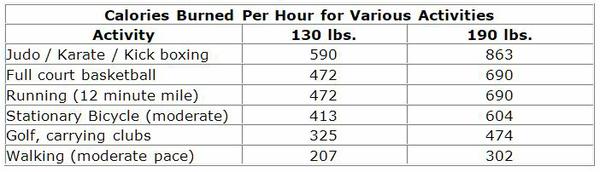
As you can see, even the most strenuous activity is no match for poor food choices.
The food you eat is the key to at least 80% of the fat-loss equation.
In fact, if you exercise the way most weight loss specialists, government agencies and medical organizations tell you to, you will probably GAIN fat!
Do You Work Out 90 Minutes... Every Day?
In 2007, the American College of Sports Medicine and the American Heart Association issued a joint statement recommending "60 to 90 minutes of physical activity" for weight loss.
And they were talking about 60 to 90 minutes per day!
Your doctor probably says the same thing.
When it comes to exercise, we've been told, "More is better!"
However, the truth is that long-duration cardio is counterproductive to your fat loss efforts.
People who Exercise More... Eat More
Long-duration cardio burns calories… but it can also make you ravenously hungry (particularly for carbohydrates). It can also make you feel entitled to bad food choices.
"I worked out... I deserve this!"
Studies clearly show that people who exercise more tend to eat more.
- A study of 538 students, published in the International Journal of Obesity found that when kids start to exercise, they ate an average 100 calories more than they burned during exercise.
- Another review of studies, published by the International Association for the Study of Obesity acknowledged that most exercise interventions fail to deliver weight loss, "primarily due to a concomitant increase in caloric intake."
Talk about getting "stuck on a treadmill."
Numerous other studies show that...
Exercise Alone (Especially “Cardio”) is Ineffective for Weight Loss
The most comprehensive review of exercise studies is the Cochrane Collaboration, which compiled the results of 43 peer-reviewed exercise and diet studies.
The studies that compared "diet only" to "exercise only" showed that exercisers lost between 1 and 9 pounds… while dieters lost between 6 and 30 pounds!
Exercise without attention to nutrition is virtually ineffective for weight loss. And in many cases, it can be counterproductive.
Now, I want to make clear that I am NOT suggesting that exercise is not important to your health...
Why You SHOULD Exercise…
The health and emotional benefits of regular exercise are undeniable...
Countless studies show that even low-level exertion improves nearly every risk factor for disease and dramatically reduces your odds of cancer, heart disease and diabetes.
It can alleviate chronic pain... strengthen your bones and increase their mass.
It can lift your mood... alleviate depression... improve memory and form new brain cells.
And here's even more great news...
The Right Kind of Exertion Rapidly Transforms Your Body
Exercise alone is no match for a poor diet.
But when you combine the right foods with the right kind of exertion, your body will respond faster than you ever thought possible!
Fat will melt away and lean muscle will take its place.
These changes will occur without hunger and denial... and without hours of boring cardio.
So, what is the “right kind” of exercise?
I would suggest that the right kind of exercise is the same kind that our biological ancestors engaged in for thousands of years...
That would include lots of moving around at a low level of exertion... occasionally lifting heavy things... and occasionally exerting yourself near your maximum capacity for short periods of time.
The way to model this in the modern world is to walk frequently. Apart from sleeping, avoid long periods of stationary inactivity. Sprint occasionally. And lift weights or engage in other resistance and weight-bearing exercises several times per week.
Focus on Intensity – Rather than Duration
And if your goal is to burn fat and make the greatest impact on your health, focus on the INTENSITY of your exercise more than the duration.
Keep in mind that "intensity" is a relative term. For a 25-year-old runner, it might mean sprinting up hills. For someone who hasn't walked around the block in two years, it might mean walking at a faster pace than normal or perhaps jogging for short distances.
The idea is to exert at 70 to 90 percent of YOUR maximum capacity for "intervals" of 30 seconds to around two minutes in duration.
Then, while you continue to move, dial down your effort for a couple minutes to recover. After this brief, active rest, raise the intensity again for a minute or two. Repeat six to eight times.
As you become accustomed to the activity, gradually increase the INTENSITY of your workouts... rather than the duration.
Studies show that this kind of "burst training" burns fat much more effectively than long-duration cardio. And the intensity causes your body to burn fat at an elevated rate for a longer period of time after your workout is complete.
This kind of exertion has also been shown to build heart and lung capacity and dramatically improve insulin sensitivity and reduce the symptoms of diabetes.
Add Strength and Resistance
In addition to exercises that build your heart and lung capacity, you should also do some form of resistance exercise - or strength training. Resistance exercise improves your appearance, increases strength and raises your metabolism (making it that much easier to burn fat).
Building muscle also boosts your brain power and can even improve your immune system!
A study of older people showed that the numbers of natural killer (NK) cells - these are critical for battling infectious disease and also cancer cells - are directly proportional to muscle mass.
Another study, published in Gerontology, showed that intense exercise actually boosted the ability of these cells to kill invaders by up to 200 percent!
Why You Need to Move... Every Day!
Physical activity should be as high a priority as eating and sleeping.
As we discussed earlier, lack of exercise is not the main culprit in the obesity epidemic.
However, it is true that too many of us go from the bed to a car to a desk to a couch and then back to bed again, without breaking a sweat.
And research shows just how harmful this can be...
In a study at the University of Missouri-Columbia, researchers had a group of rats run on exercise wheels consistently for three weeks. Then they locked the wheels.
Within only 48 hours the rat's insulin sensitivity dropped by one third… and continued to decrease the longer the rats were inactive.
When it comes to weight loss, your diet is the most important factor. It is what you eat - not how hard you try to work it off - that matters most. But the health and fitness benefits of exercise and movement also cannot be understated.
The mainstream mantra for weight loss is: Eat less and exercise more.
Your mantra should be: Eat Better. Exercise Smarter.
With that new mantra in mind...1 cup of this delicious hot beverage in the morning sets you up to burn more fat than 45 exhausting minutes on the treadmill. One person lost a crazy 84 lbs over the first 3 months and literally saved his own life!…